



If you spend enough time paying attention to Tatiana Snead and DJ Miss Milan, you quickly realize neither of them has much trouble telling you what they think. And that…is part of the charm.
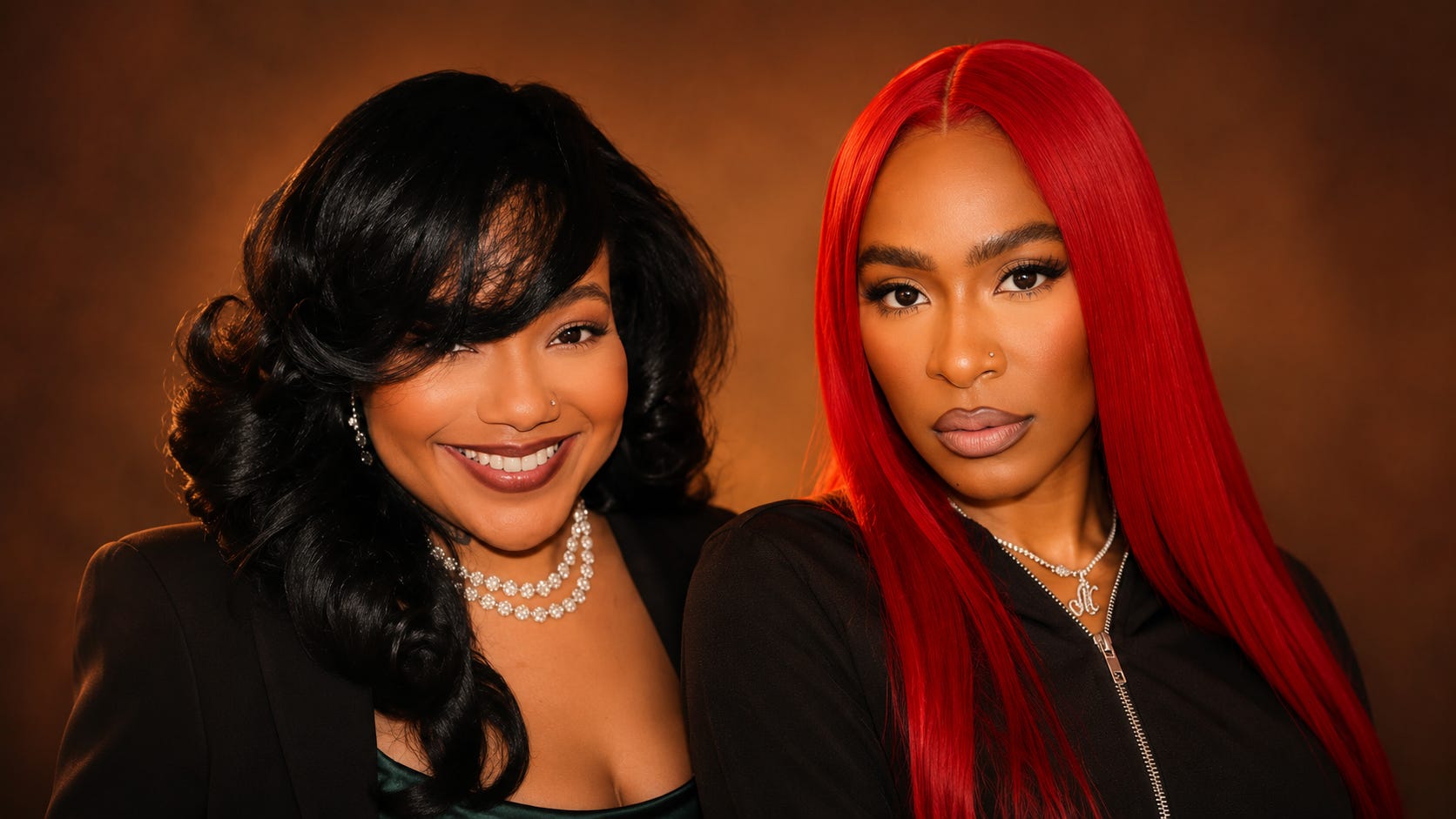
They can talk R&B or something happening in pop culture, jump into film or politics conversations, circle back to whatever album everybody is listening to that week, and somehow make it all feel like the same conversation. It’s part of what makes their podcast Reasonable Dialogue work, but it also makes sense when you look at what they both do outside of it.
Tatiana is a Black music editor and programmer working across R&B, African, and Caribbean music for Pandora and SiriusXM. On a typical playback day, she reviews more than 100 new releases, which means her version of “keeping up with new music” looks a little different from the rest of ours.
DJ Miss Milan’s version of curation happens much louder. As a DJ, she’s toured with Doechii, performed alongside her on stages including the Grammys, and built her own reputation through DJ sets and curated events around the country. Her job is more about looking up from the booth and figuring out what the party needs next.
Different environments. Same basic instinct. Know what deserves attention. Know what belongs together. Know when to play it, and why, and how.
That’s why both of them made sense for The Curator Issue. We usually talk about curation like it has to be precious. Vinyl collections, obscure records, perfect playlists, somebody explaining why a song you’ve never heard completely changed their life. And yeah, all of that counts. But curation can also be much simpler than that. Sometimes it’s knowing what matters enough to give it space.
Tatiana’s job makes that reality especially obvious. Thousands of songs arrive every day, while the number of hours available to actually listen remains 24. Tatiana’s queue fills with what record labels, distributors, and artist teams have flagged as priorities, which means the first act of curation often happens before she even presses play. As she told Music Business Worldwide, “If everything is a priority, then nothing is truly a priority.”
It’s a blunt way of describing something music fans don’t always see. Curation isn’t just finding good music. It’s editing.
Some songs get a full listen. Another might not make it past the first thirty seconds. A newer artist gets placed beside someone established because the connection feels right. A record gets passed over because the timing is wrong, or maybe the presentation isn’t there yet.
That doesn’t mean the song is bad. It means attention is limited.
A big myth in the digital era of music is that getting onto a big playlist or radio station suddenly solves everything. Tatiana pushes back on that. “Curation is not even half the battle when it comes to breaking an artist,” she told MBW. Getting programmed can open a door, but touring, marketing, community-building, social presence, and whether listeners care enough to stay all still matter afterward.
A curator can introduce you, but they can’t make people love you. They can’t build the fanbase for you. They can’t replace the work that happens after someone presses play. Artists still have to do that part.
Tatiana’s job is recognizing when something is worth putting in front of more people, and she’s built a reputation for being one of the most trusted and sought-after voices in R&B music because of it.
DJ Miss Milan’s version of that happens in the club and at live events.
A DJ set is basically one long string of decisions made in public. You can prepare all you want, but the room might have completely different plans. The song you thought would go crazy could fall flat. The record you almost skipped might suddenly become the one everybody screams that night.
A good DJ notices. A great one reacts before the energy disappears.
That instinct has become especially visible through Milan’s work with Doechii. She isn’t just standing behind the booth while Doechii performs in front of her. Milan has become part of the show itself: supplying ad-libs, moving through choreography, helping shape transitions, and occasionally stepping directly into the performance. During Doechii’s 2025 Grammy performance of “Catfish” and “Denial Is a River,” Milan literally entered the scene as the therapist character in the latter song, turning what could have been a standard DJ role into part of the performance storytelling.
That dynamic feels intentional. Milan has described their relationship as built on mutual respect—Doechii respecting her as a DJ, Milan respecting Doechii as an artist—and on the fact that both genuinely love to perform. “We are both theater kids,” Milan told USA TODAY, explaining that the chemistry works because neither of them is content to simply stand still and do the obvious version of the job.
Milan has talked about how she and Doechii are helping bring back the tradition of the DJ and MC functioning as a real unit, where the DJ contributes to the energy, personality, and rhythm of the performance instead of fading into the background. If you’ve watched them together, that’s immediately clear. Milan might be behind the decks one second and hitting an eight-count the next.
That’s what makes her kind of curation so physical. It isn’t just what song comes next. It’s what does this moment need? Does the crowd need another ten seconds of tension? Does Doechii need a vocal pickup while she’s moving through choreography? Does the club’s energy need to build, switch, or completely explode?

It’s another form of sequencing. Which brings us back to Reasonable Dialogue.
The podcast gives Tatiana and Milan somewhere to use those same instincts without having to stay inside music. A rundown can move from an R&B release to film, celebrity mess, politics, tech, internet discourse, or whatever else has taken over the group chat that week.
And that’s part of what makes the show fun. It doesn’t feel like two people sitting behind microphones trying to prove how knowledgeable they are. It feels like two friends who already had opinions and finally turned the mics on.
Culture doesn’t actually arrive in categories anyway.
Nobody finishes listening to an album and says, “Great, now I will move into the television portion of my day.” Music, memes, politics, relationships, movies, fashion, industry drama, and whatever happened on the timeline at 2 p.m. all end up crashing into each other. Reasonable Dialogue works because Tatiana and Milan allow the conversation to move the way real life does.
But choosing what deserves conversation is curation too. A podcast rundown is basically another playlist.
What gets the opener? What deserves twenty minutes? What seemed important two days ago but suddenly feels exhausted? What story did everyone rush through that might actually be worth sitting with a little longer?
That’s where Tatiana and Milan’s professional worlds meet most naturally. Both are thinking about audience, timing, context, and attention. And both understand that having good taste means very little if you never do anything with it.
Anybody can say they knew about an artist early. Anybody can build a playlist once the song is already everywhere. The harder part is trusting your ear before consensus arrives. Giving something space when there’s still some risk attached to it. Knowing when the obvious choice isn’t necessarily the right one.
That idea has come up again and again throughout The Curator Issue. Joe Kay and DJ Rosegawd talk about putting people onto music before the rest of the world catches up. Internet X considers whether a piece of clothing actually belongs in an artist’s larger visual world. Tatiana and Milan are working through the same question from two completely different angles.
