



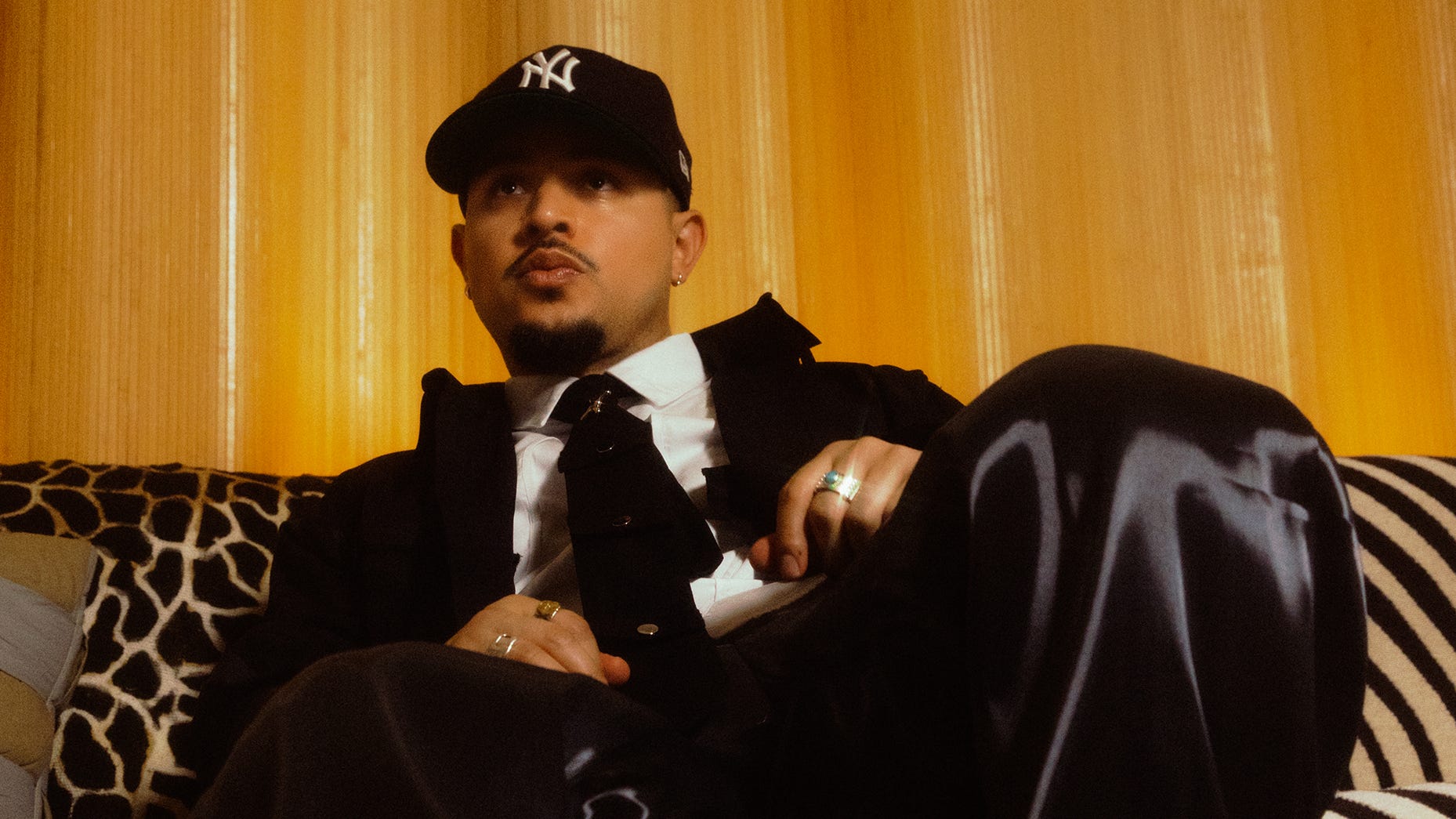
Music plays inside Joe Kay’s home in Miami, which probably isn’t surprising. But he doesn’t plan to share this playlist. This one belongs to him. He reaches for it when he wants to feel good, when he’s getting dressed before going out, lighting incense, choosing a fragrance, or simply creating a certain energy in his home. In this case, it’s the soundtrack for our Curation Issue photoshoot that’s taking place right in his living room.
As he explains it, music is only one part of the curation experience. He intentionally places photographs, artwork, and furniture throughout the house as reminders of memories, people, and ideas he wants to keep close. Nothing feels accidental. “I’ve always been a curator first,” he says. “Curation, for me, is very personal.”
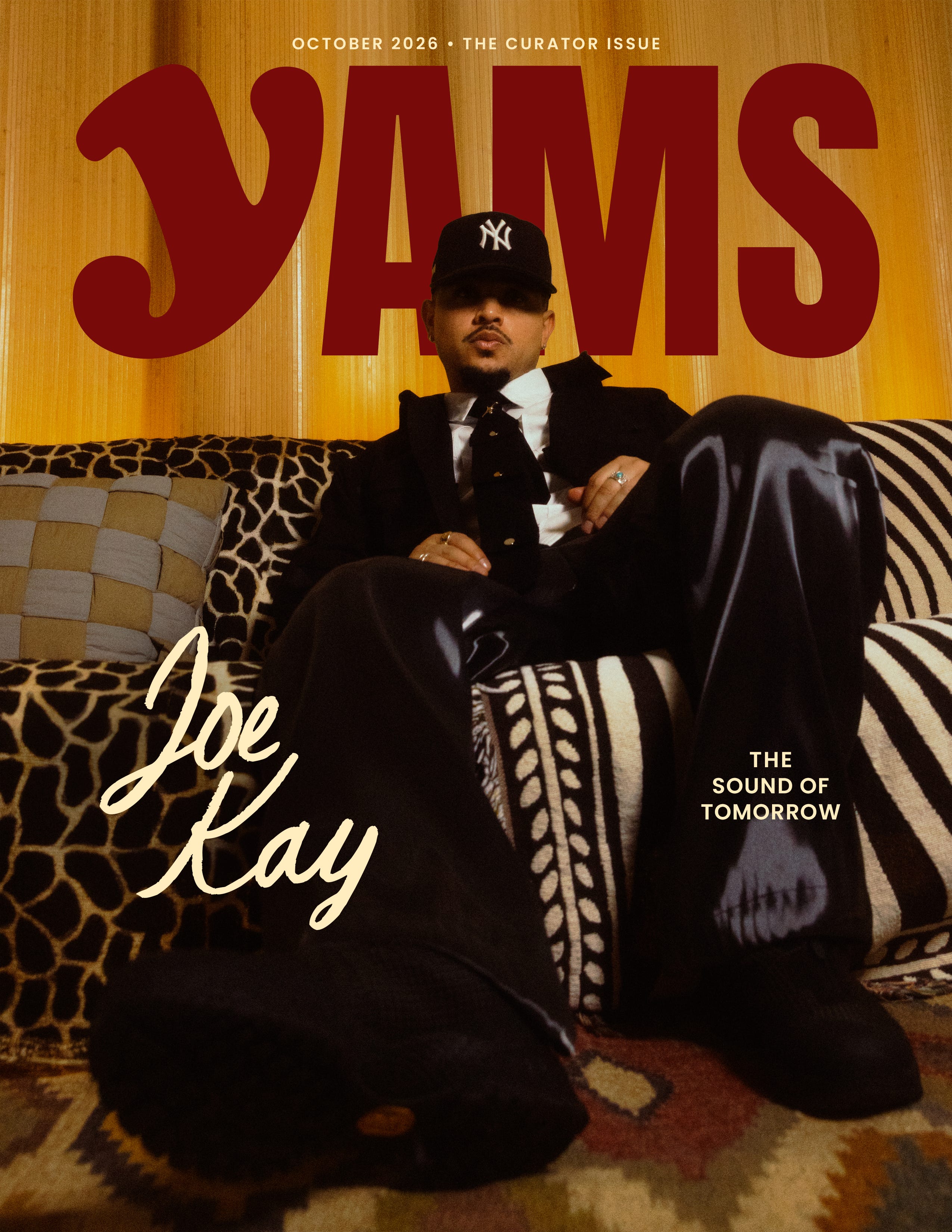
Joe has spent much of his adult life being described through a collection of titles: DJ, radio host, producer, A&R, label founder. Most know him as the architect behind Soulection, the music platform and global community he launched with Andre Power and Guillaume Bonte while studying at California State University, Long Beach in 2011. But “curator” might be the simplest way to understand how all those identities connect.
For him, curation extends beyond sequencing music. It’s deciding what belongs in a room and how that room should make someone feel. It’s the relationship between a song, a scent, a piece of clothing, and a memory. It’s taste-making, sure, but without the coldness the term can carry. Joe’s version of taste has always been rooted in feeling first, and that philosophy has quietly guided Soulection for the last decade and a half.
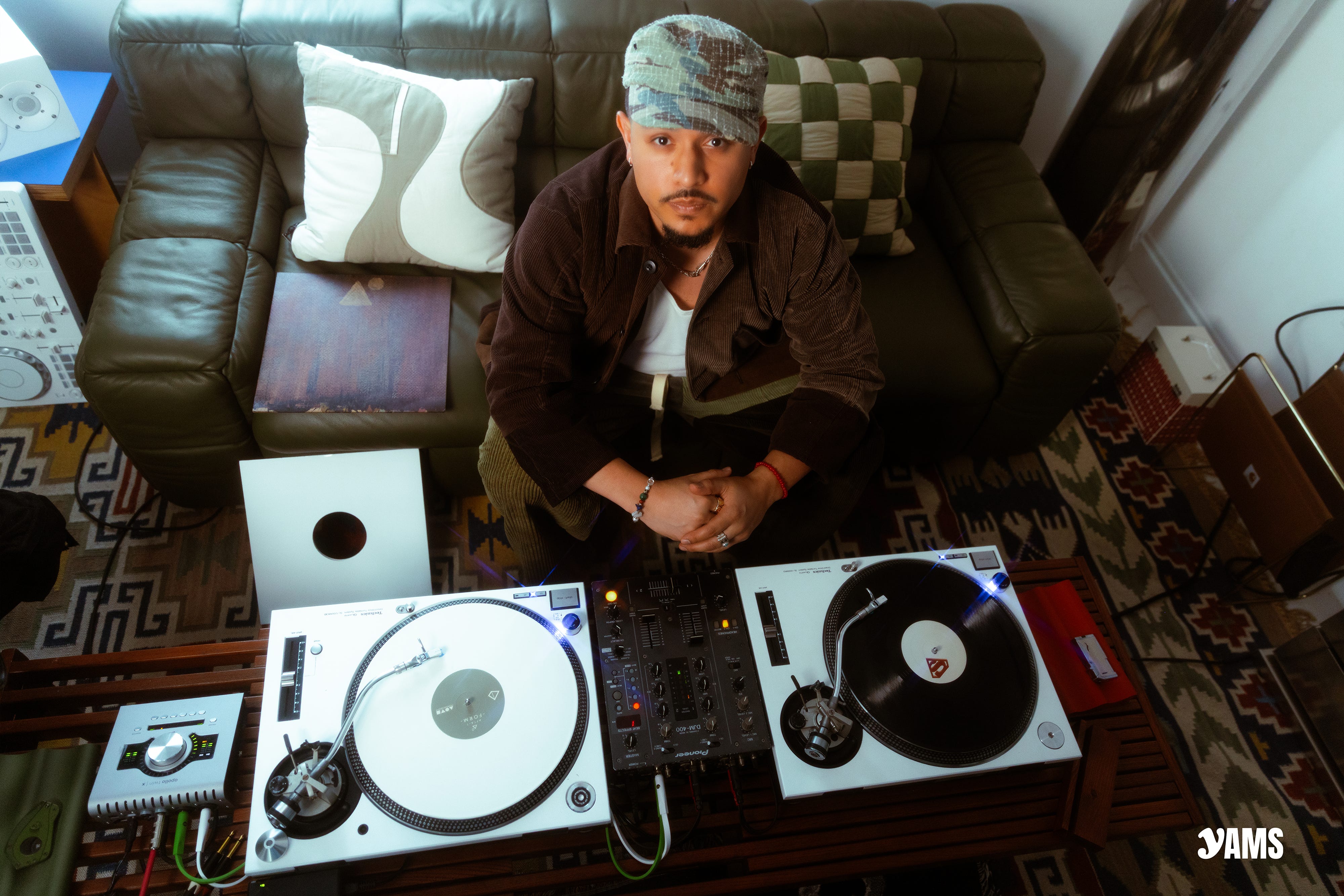
He first learned that feeling in the passenger seat. Growing up in Los Angeles, Joe remembers riding to school with his parents while Power 106 or 92.3 The Beat played in the background. Tupac and West Coast staples lived beside the R&B he loved, along with artists like Erykah Badu and A Tribe Called Quest. This was the 90s, before streaming turned music into an endless scroll, and Joe remembers the waiting as much as the songs themselves. If a favorite record came on the radio, you appreciated it because there was no rewind button and no guarantee you would hear it again anytime soon. “Whenever you heard them, it was a moment,” he recalls.
That relationship to listening feels especially important now. Today, music arrives faster than anyone can process it. Every Friday brings more albums and singles than one person could ever fully absorb, and algorithms increasingly decide which songs rise to the top. In that environment, a curator isn’t valuable simply because they have access. Everybody has access. What matters is context, judgment, and trust. The best curators don’t just tell you what exists; they make you care enough to stop and listen. For 15 years, that has been Soulection’s greatest trick.

Building Trust, Two Hours at a Time
Soulection began as both a radio show and a larger idea. While at Cal State Long Beach, Joe imagined a platform to release music, highlight his friends, and introduce listeners to a growing network of artists and producers he met online. The radio show became the engine. Each week, he filled two hours with music that reflected what he saw as Soulection’s developing DNA: beats, soul, experimental production, R&B, and whatever else felt exciting enough to share.
In those early years, he says few people around him fully believed in the vision, so consistency became the proof. Rather than explain endlessly what Soulection could become, he simply kept showing people. “These are the artists you need to know about, and this is why,” he remembers of that period.


For those of us who entered adulthood in the early 2010s, Soulection became one of those portals that could change how you heard music. SoundCloud was booming, producers were flipping samples and reshaping R&B from their bedrooms, and scenes that once might have developed locally were suddenly colliding across continents. A listener in Ohio could discover a producer in London and an artist in Toronto in the same sitting. Soulection gave those unique sounds a shared home without forcing them into a single genre.
“Futuristic beats, eclectic sounds, soulful music, quality music,” Joe announced on Soulection Radio's first official episode on January 25, 2011. The description still rings true fifteen years later.
What separated Soulection from being merely another cool music platform was the relationship it built with its audience. Joe returned every week. The branding remained intentional. The IRL events carried the same cool sensibilities as the radio show. More importantly, listeners understood that even if they didn’t recognize the name on the tracklist, Soulection had heard enough to believe it was worth their time. That trust became the real currency. Joe has watched music collectives appear, explode, and disappear over the years. He has also watched newer platforms surpass Soulection in visibility or growth, only to cool off when the moment moved elsewhere. His approach has been to stay in motion without chasing every shift. “Keep your feet moving,” he says. “Always keep showing progress.”
That steady pace eventually carried Soulection far beyond college radio. In 2014, Joe and members of the collective traveled through Europe on a 10-city tour, bringing a sound that had largely lived online into physical rooms overseas. Around the same time, Joe left his day job and began what would become more than a decade of full-time work on Soulection. Then came another leap: Apple invited Soulection to join the Beats 1 launch lineup alongside Dr. Dre, Pharrell, Q-Tip, Elton John, and Drake. The radio show that started at Cal State Long Beach suddenly had a global home inside the launch of Apple Music itself. More than a decade later, Soulection remains part of that ecosystem.
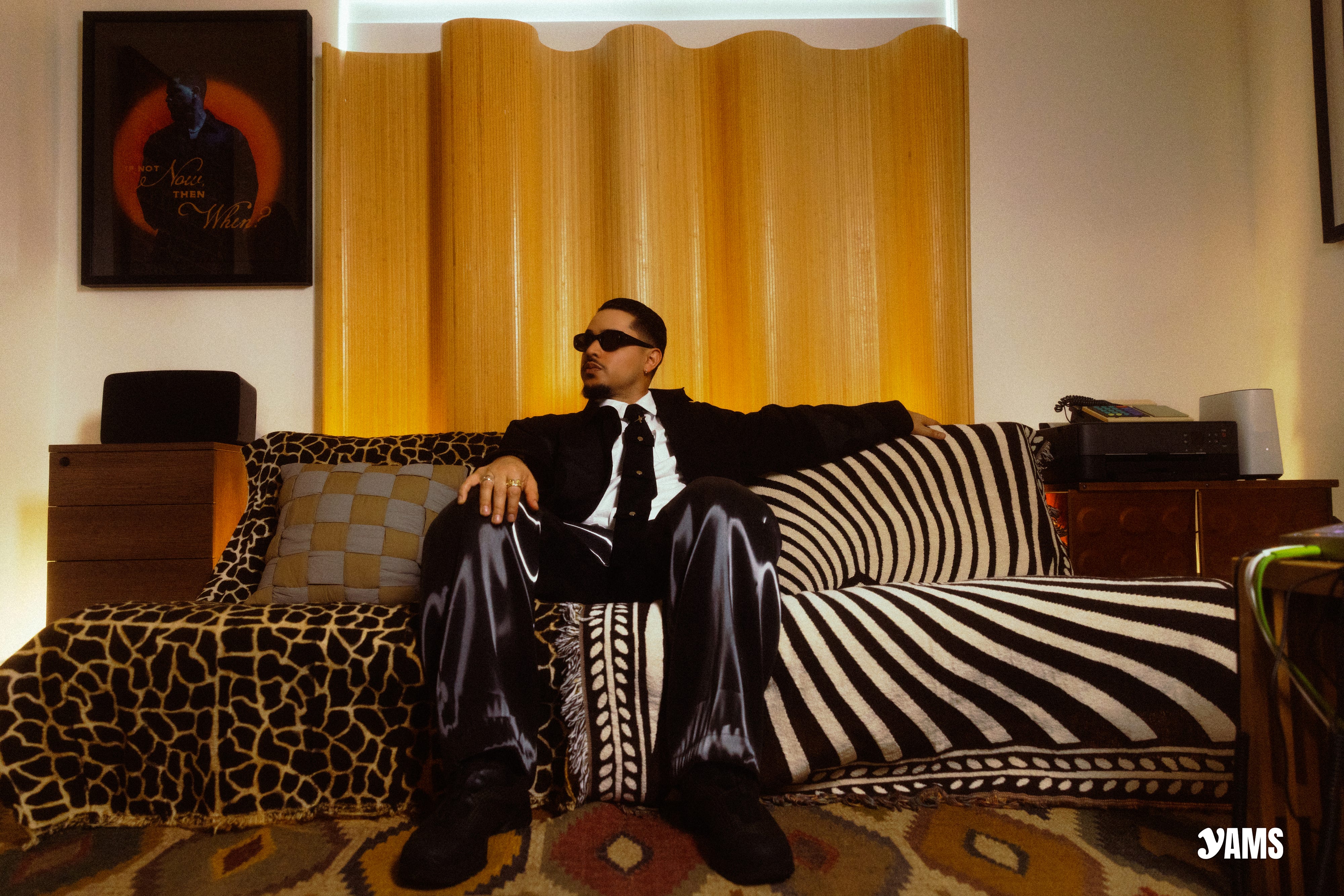
It would be easy for Joe to tell Soulection's story through those milestones, but he rarely seems most interested in prestige. What he returns to is discovery. The radio show still has a simple weekly assignment: put people onto something dope. Sometimes that means introducing a newly released record. Sometimes, when the release calendar feels slow, it means digging back into the archive and giving something listeners may have forgotten new context. Joe understands that curation isn’t only about finding what’s new; it’s about sequencing and timing. The right older record placed between two newer ones can suddenly feel fresh again. “It’s about what’s played. It’s about how it’s arranged and how it’s sequenced.”
Being Early Isn’t the Point
Soulection’s track record makes it tempting to talk about Joe as a kind of musical fortune teller. Bryson Tiller, Snoh Aalegra, SiR, Daniel Caesar, Brent Faiyaz, Ravyn Lenae, and Summer Walker are among the artists he remembers playing when their audiences were considerably smaller. More recently, Soulection has supported artists like Odeal and Isaiah Falls early in their rise. That history is a source of legitimate pride. “We’ve always been early,” Joe says, and after scrolling through that list, it’s difficult to disagree.
But Joe is careful with what “early” means. He doesn’t talk as if playing an artist first makes him responsible for where they eventually land. In fact, when he discusses Soulection’s relationship to emerging talent, he makes a point of rejecting that narrative. “I never wanna take credit and say, ‘Oh, well, because of Soulection, we made this artist,’” he says. “No. The artists created the music. They put in the work. It’s their vision, their sound. Soulection has always come in and amplified.”
That distinction says a lot about what good curation actually requires. It isn’t ownership. It’s advocacy. The curator’s job is to notice something compelling, place it in front of the right audience, and give people enough context to listen differently. It also takes humility to accept that you won’t always know what happens next.
Joe can look back now at names like Brent Faiyaz, Daniel Caesar, or Ravyn Lenae and see artists who became central to contemporary R&B, but he couldn't predict the exact shape of those careers. You hear the potential before you can see the outcome.
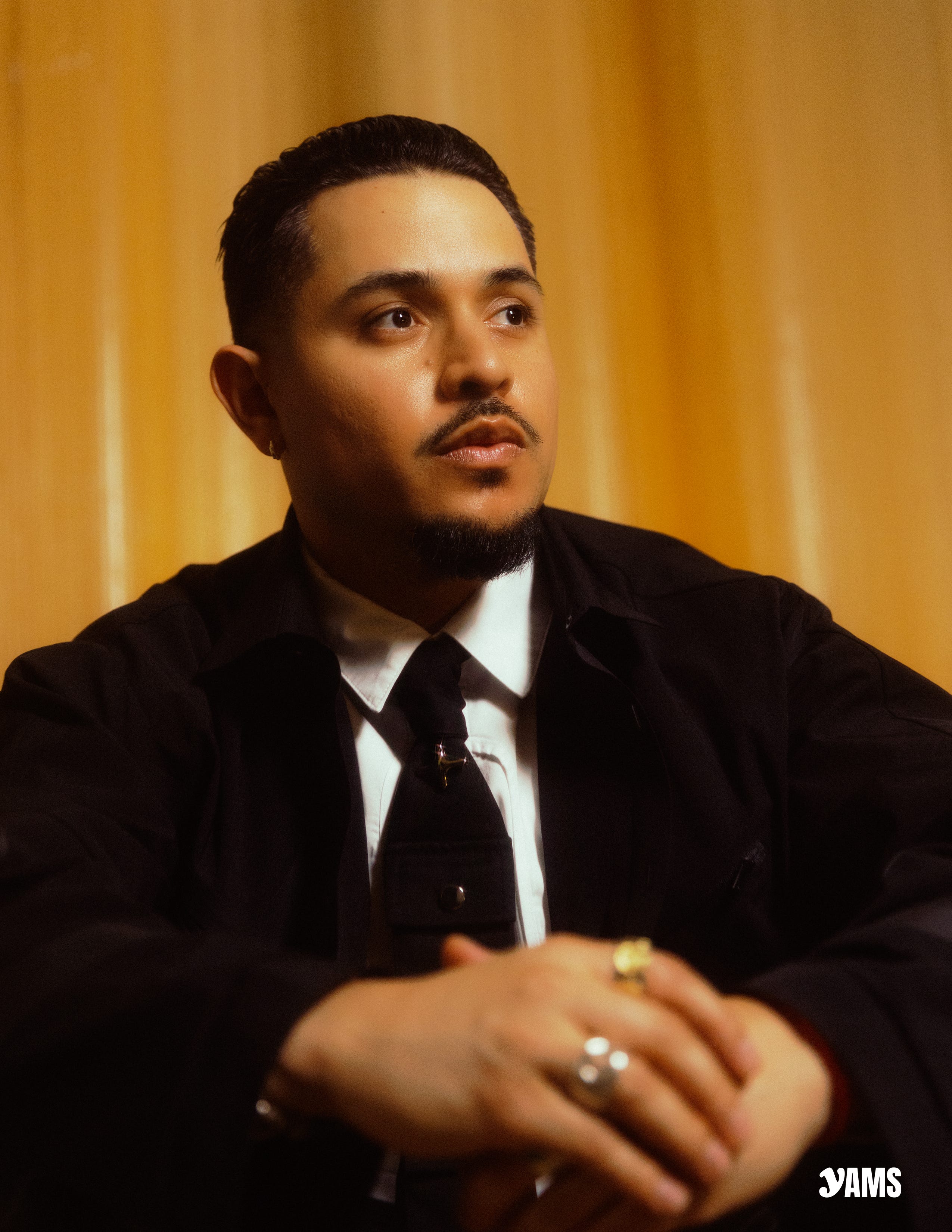
Maybe that’s the difference between taste and trend forecasting. Taste isn’t clairvoyance. It’s conviction. It’s hearing something while the room is still quiet and trusting your response before the public arrives.
That instinct also shapes Joe’s evolution as a producer. After more than a decade of primarily presenting other people’s records, he released his first project, If Not Now Then When, in 2025, bringing artists including Isaiah Falls, Dylan Sinclair, Arin Ray, and Sinéad Harnett into a project built through the same collaborative lens that has defined Soulection from the beginning.
D’Mile, whose production credits stretch across some of R&B and pop’s biggest names, also contributed to the project. For Joe, making original music didn’t require abandoning curation; it simply pushed the philosophy upstream. Instead of finding the right records after they existed, he could help create reasons for them in the first place.
Curiosity Is the Sound
The longer a platform survives, the harder its identity becomes to shake. Audiences fall in love with a particular era and keep asking for it. But Joe doesn’t seem interested in turning Soulection’s early SoundCloud years into a museum. Lofi beats and R&B will always be central to its DNA, he says, but the platform has expanded as his own listening has expanded. “As the sounds become more global, we have also evolved,” he explains.
Miami has become part of that education. Since relocating to the vibrantly diverse city, Joe has paid closer attention to Haitian music and Caribbean styles he had previously encountered without fully understanding. He talks about learning Kompa and Bouyon, tracing the origins of rhythms, and then bringing those discoveries into Soulection Radio. Even one unfamiliar record in a two-hour show can become an entry point. Someone hears it, gets curious, and starts their own research. For Joe, that chain reaction is part of his why.
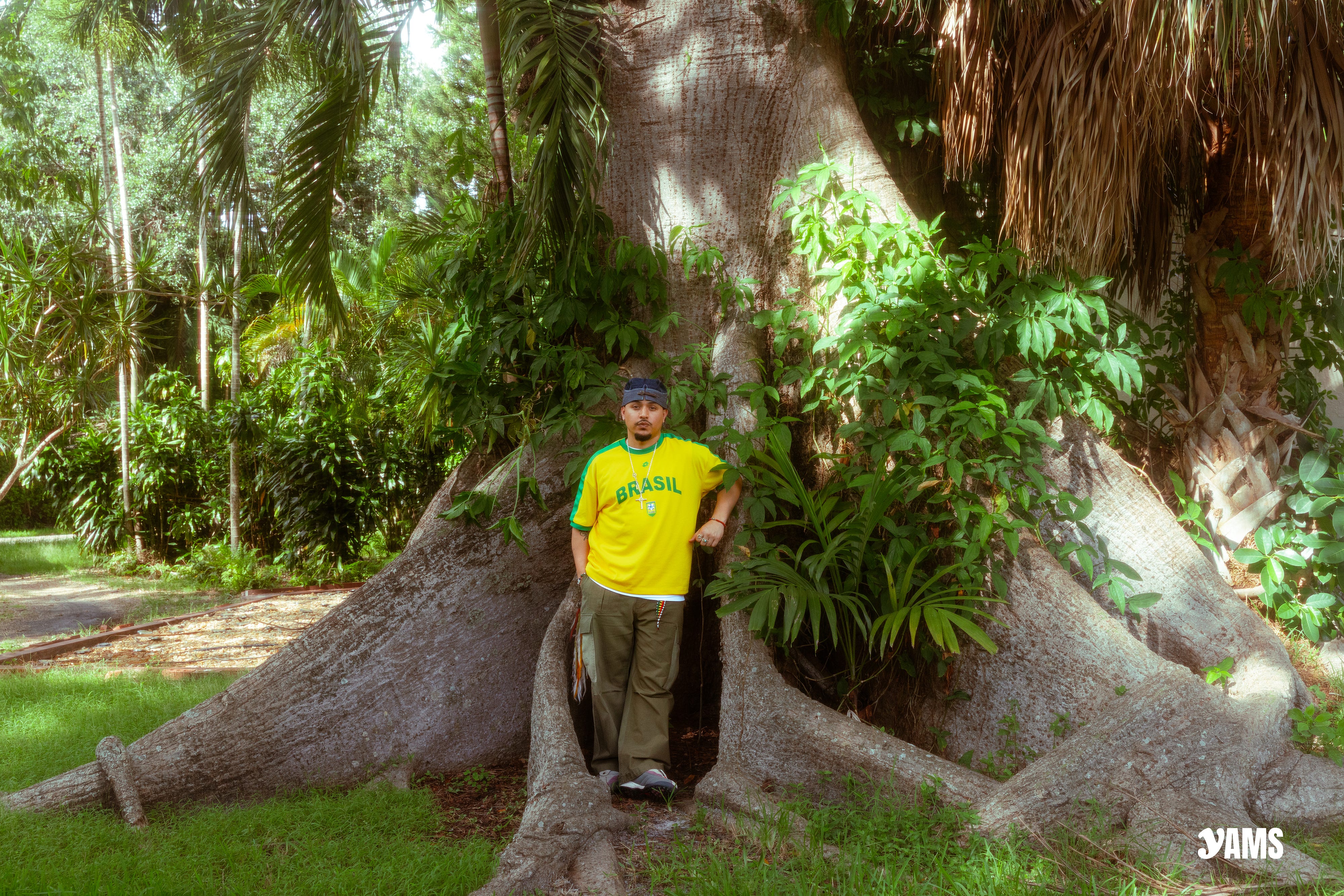
That idea is also shaping Soulection’s upcoming 15-year anniversary album, which Joe describes as an original project bringing together artists and producers who have been part of the platform’s history alongside a newer generation. Rather than create a nostalgia exercise, the goal is to let those worlds speak to one another.
One of the first records grew out of a session with Odeal at Joe’s Miami home, drawing on the Batida sound associated with Lisbon, Portugal and leaning more uptempo than listeners might expect from the British-Nigerian singer. Joe likes the song precisely because it stretches what people might assume about Odeal while still feeling natural inside the Soulection universe.
“It feels like Soulection.”
Beyond any singular sound, “Soulection” is now its own feeling. Not a genre, but a complete sense of the vibe you’re about to step into. It can mean an R&B slow jam, a J. Dilla instrumental, a Brazilian club rhythm, a 70s sample you haven’t heard in years, or a genre you’ve never heard at all. What binds it together is less tempo or production style than perspective. Soulection sounds like someone who loves music and cares to find something new for you to digest.


That may be Joe Kay’s most important contribution to modern music culture. Not simply introducing listeners to artists before they became famous, but modeling a way of listening that refuses complacency. Success can convince people their taste has reached some final form, that what they loved at 25 should define what they understand at 35 or 45. Joe’s approach suggests the opposite. Good taste isn’t about accumulating enough knowledge to stop learning. It’s about remaining curious enough to keep being surprised.
When he thinks ahead to Soulection’s 20th anniversary, Joe imagines the radio show approaching 1,000 episodes, the label continuing to release music, and the Soulection experience still bringing people together physically. But he also talks about building a larger team, bringing more women into leadership and creating opportunities for younger people to grow within the music industry. The future he describes isn’t just about Soulection getting bigger; it’s about widening who gets to help shape what comes next.
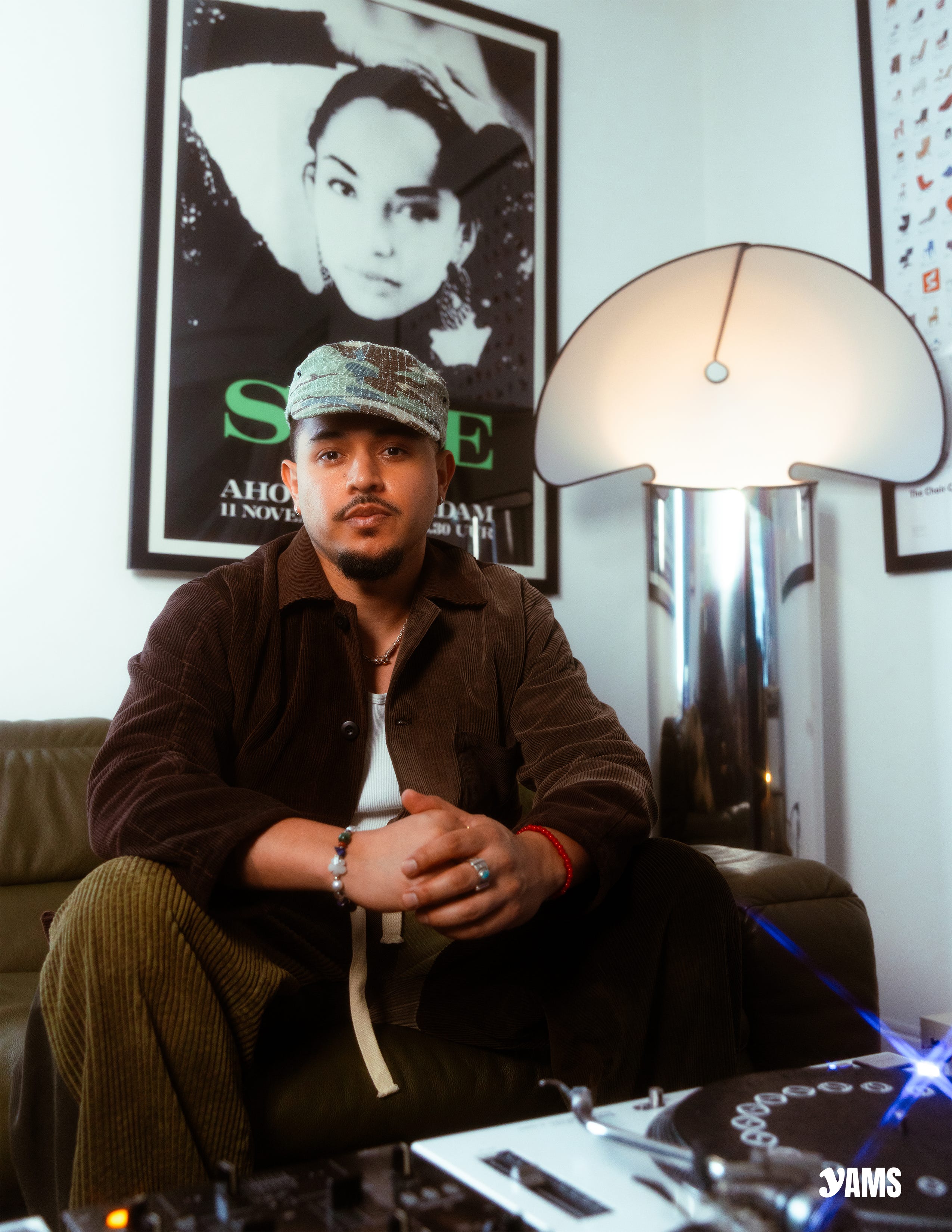
It brings us back to Joe’s home in Miami, surrounded by records, artwork, scents, clothes, and objects chosen because each one reminds him of something special. In his world, curation isn’t a performance of knowing more than everyone else. It’s a practice of paying attention. A way to recognize what moves you, understand why it moves you, and create the space for someone else to feel it too.
Fifteen years ago, Joe Kay was sitting behind a microphone telling listeners about artists he thought they should hear. Fifteen years later, the scale has changed considerably, but the impulse hasn’t. Somewhere, there is still a record he hasn’t heard, a producer he doesn’t know, a rhythm whose history he hasn’t learned yet.
For someone whose career has been built on having an ear toward the future, the most impressive thing is that Joe still seems genuinely excited by the possibility that the next sound capable of changing everything could be one play away.


