



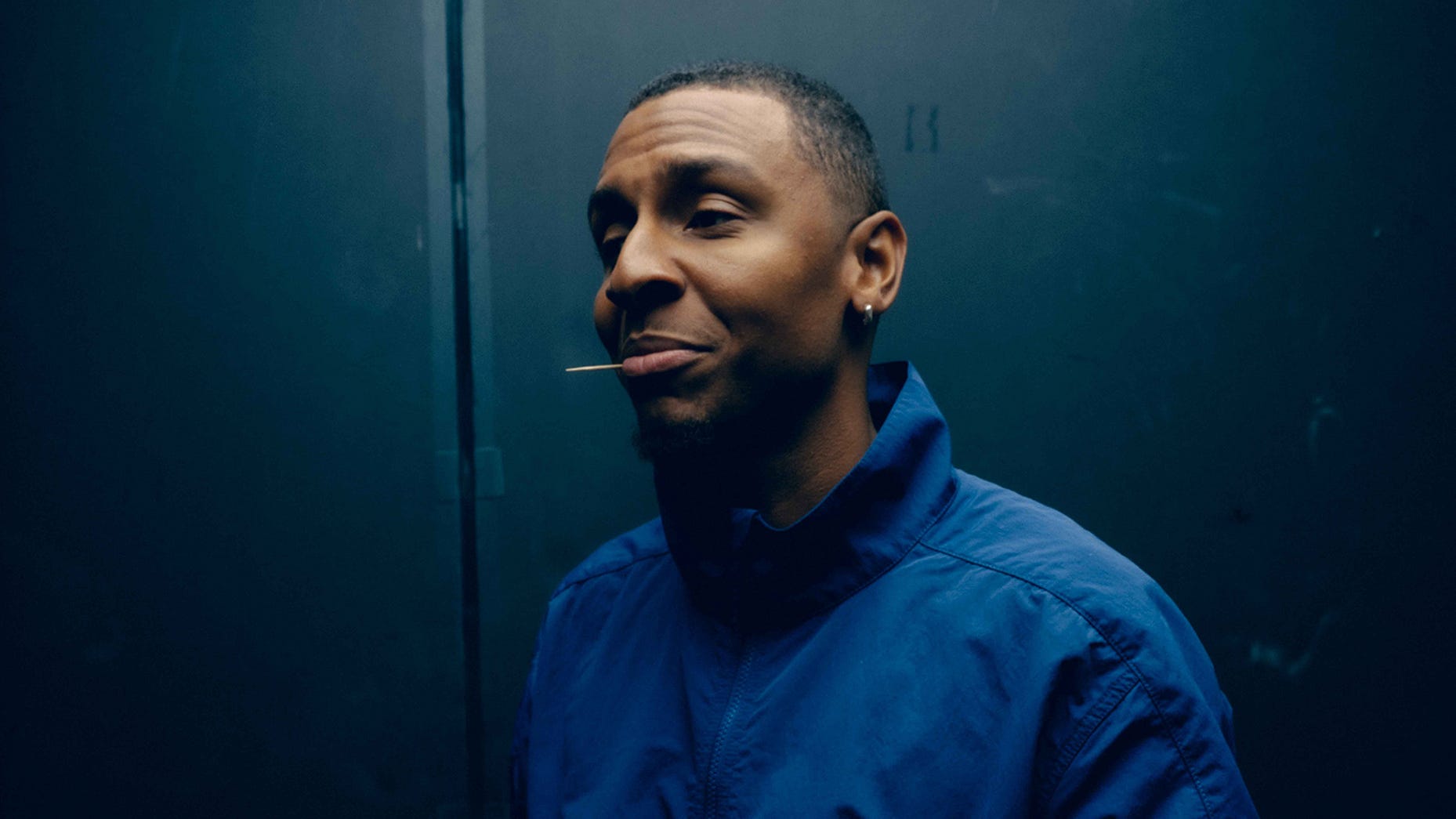
“Picture this: The year is 2021.
You’re in the living room studio of your best friend’s apartment. The AC just broke, so you’re nestled by the window, stealing glances as people pass by on a hot LA November day.
Episodes of Martin are playing on the TV, but it just doesn’t feel like the Thanksgiving we’re used to. So, we turn the volume off and start making the soundtrack to what we would play at the dinner table at grandma’s house. [A song the world would come to know as “Yamz”]. I can’t lie; we kept getting distracted by the women passing by that window. They let us know what we were cookin’ up got their stamp of approval, so shout out to the Black girls with the Tupac bandanas on that day.
Fast forward, and our heroes like Charlie Wilson and J. Moss are singing the song. Our cousins, [who] we were thousands of miles away from, were doing singing challenges online. High school friends, church folk, strangers— all bumpin’ our song. It felt surreal. I’ve had a few viral records before, but not like this. Devin [Morrison] must have changed the drums when I went outside to get that girl’s number. “Yamz” being beloved by the culture is exactly the kind of success that feels as warm as that dinner I was craving that hot LA November.”
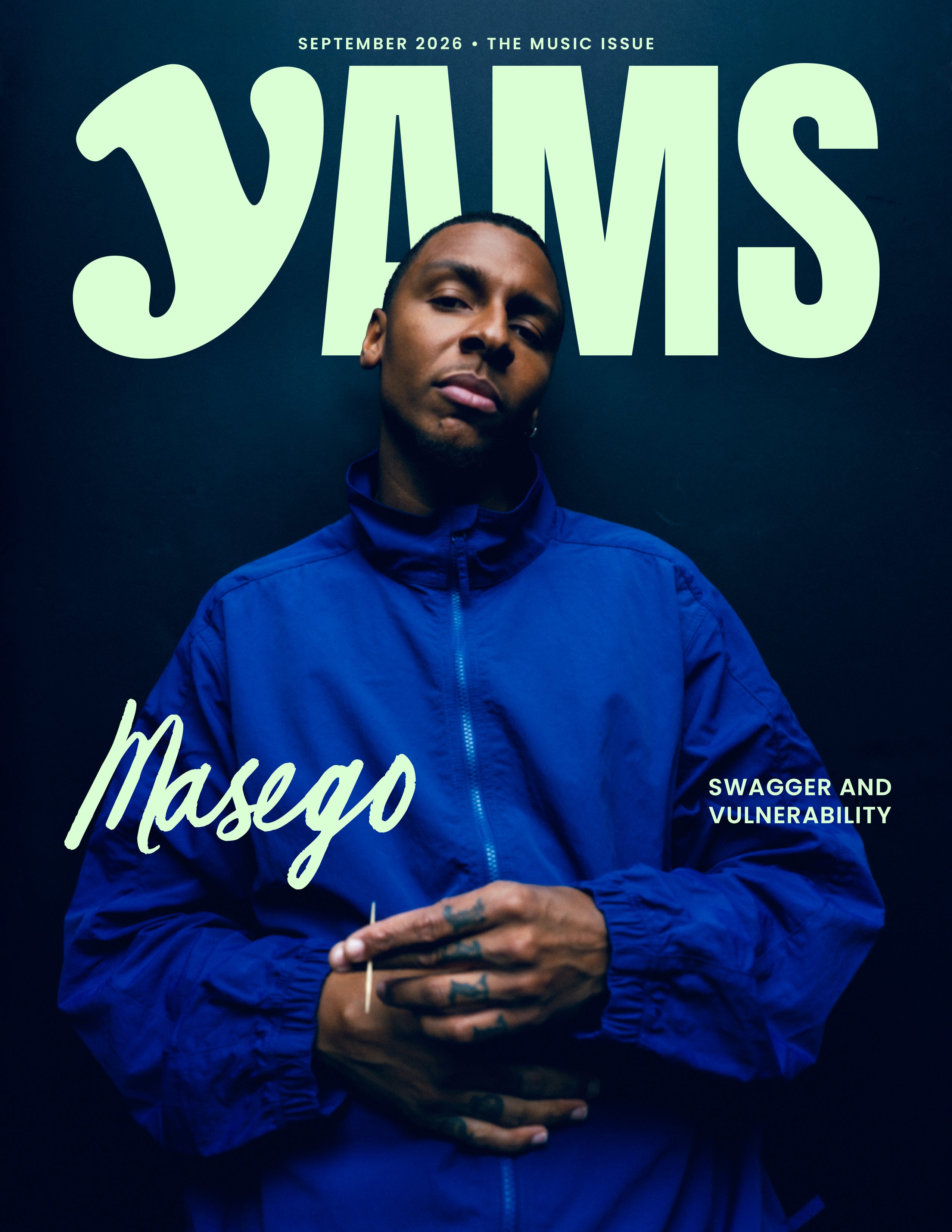
That is the origin story behind Masego’s viral 2021 sensation, “Yamz.” Much like this recollection, the Jamaican-American phenomenon also had to resort to his humble beginnings to figure out how who he was could benefit who he was becoming. Masego was once known as the cool kid with a saxophone, full of mystique. Years and a few life-altering obstacles later, he realized he had to peel back the layers of himself to rebuild his life, now putting the man behind the mystery on full display to cement his place in the R&B pantheon.
His journey with R&B began when he was working for the Air Force. Chrisette Michele’s Epiphany, Fantasia’s vocal prowess, and Jamie Foxx’s soulful freestyles during his standups in the ‘90s were standout moments that made Masego both a fan and an eager student of R&B.
Early in his career, he also freestyled much of his music in the studio, but for his latest album, Fix Your Face, he took a different route—deeming it necessary to put pen to pad. The catalyst was his vulnerability. “Seeing how Usher, Sade, and Lauryn Hill approach songwriting, [they] asked these questions that I don’t wanna ask out loud, [discussed] things that make me feel very exposed. I was like, ‘Yeah, I never do that,’” he explained. “If I’m truly trying to really be in [R&B], I need to do my rite of passage. I gotta be vulnerable and take off my cool for a second.”
Masego quipped, “Bravado and charisma are easy for me. But vulnerability? Nah.” He faults his Caribbean upbringing for that, affirming the notion that it’s often made difficult to express your emotions freely in Caribbean households. He recalled once when he was afraid to swim, and his uncle tossed him in the pool anyway. “You live or die” is what he was told, and though Masego did learn how to swim, it also taught him to face his fears head-on in its own seemingly traumatic way.
For his new album Fix Your Face, Masego reveled in introspection, gauging when vulnerability was present, but he continually reiterated the fact that being emotional isn’t something that comes easily or naturally to him. Thus, he became a student of those he felt oozed emotion, like Amy Winehouse.
“‘Stronger Than Me’ is my jam. I was like, ‘This is your journal. I’m not supposed to be hearing this.’ I felt like that was a person to study because that’s something I wouldn’t do. I would study [Amy’s] songs for the past, and then SZA’s for the present. SZA is also saying things we not supposed to be hearing. I felt like that was a way to start vulnerability. Let me speak as if it’s the last text Ima send to somebody.”
Records like “Breathe,” which he freestyled, and “Sounds Like” were among those that carried an emotional weight for Masego.
“I didn’t see my story as something worth pausing on and singing about,” the musician confessed. “I was trying to play basketball. That didn’t work out, and I started doing music. But when I told my story to a few people that didn’t know me, they were like, ‘Wow, so you went through this life-threatening accident, and it pushed you towards music?’ In Caribbean culture, it’s like, yeah, that’s just life.”
That emotional fortitude also expanded to his featured guests, including Musiq Soulchild, Keyshia Cole, and Lekan. “I wanted to get people that I was both studying and proud of with how they’ve approached vulnerability and not just being cool,” Masego said happily. “Cool is important, but I like the people that touch on certain areas that aren’t as shiny. Musiq is one of the smartest people in the studio. Like, he can just sing what I should play on the saxophone, and it’ll make sense by the end of the session. I’ve always loved his conversational songwriting, which is so difficult to replicate because he’s gonna get across what he wants to say, versus making sure that the melody is the key. [With] Keyshia Cole, she’s a lot more gospel than people let on. I feel like she comes from that Mary J. [Blige] lineage.”
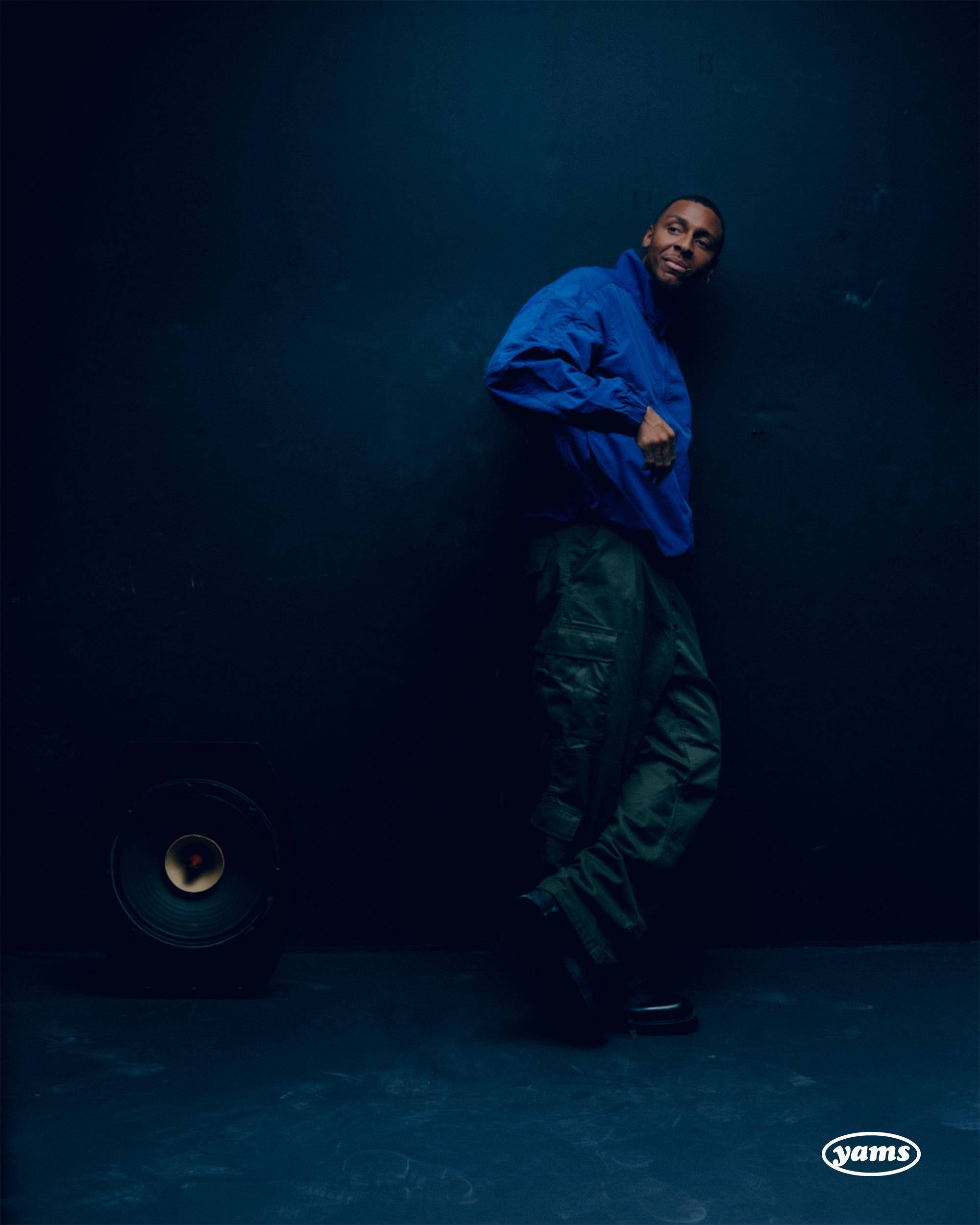
The real challenge for Masego, however, had less to do with him and more to do with the people in the stories he was sharing. “It was difficult to write because I had to be very intentional about what I was saying, and then being okay with exposing parts of my story and my parents’ and whatnot,” Masego confessed. “So, that actually was the challenge.”
In his youth, Masego had dreams of being the next Kobe Bryant. He was certain about that, but when he pivoted to music, he poured all of his athletic drive, passion, and discipline into the art form. “I feel like whatever [the] career, you have to put on the version of you that can accomplish that career at its fullest form,” he shared. “For music, it’s all these feels, emotions, and talking to people. I had to just learn to be a different version of myself, basically.”
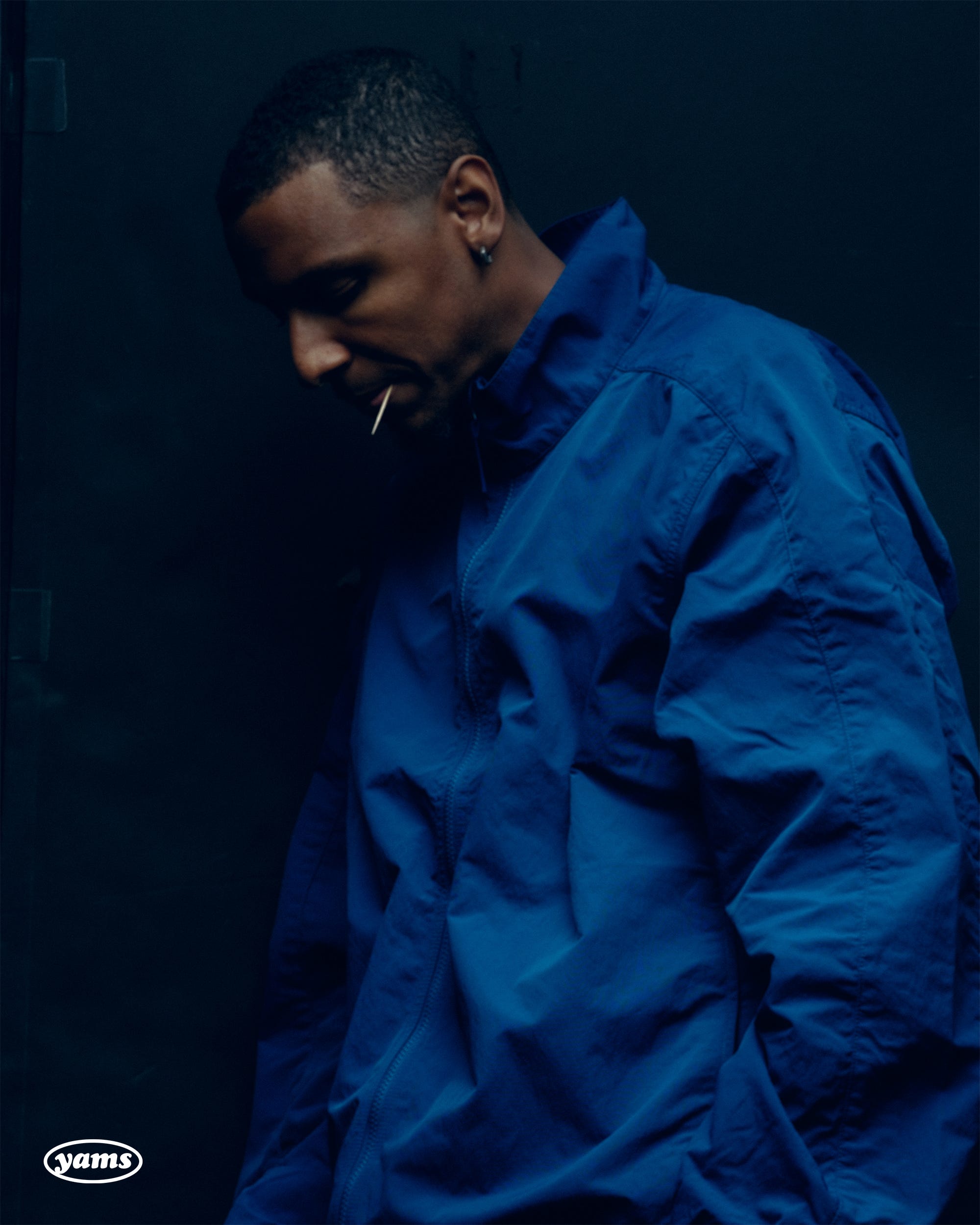
Over time, several new versions of Masego have emerged. He became obsessed with legacy, wanted to convert every song he created into sheet music for schools, desired to buy land in several cities, and it was all in an effort to find his purpose beyond being online and onstage. He started to sit with a lot of things, delve into new projects, and find fulfillment. All of which led to the making of Fix Your Face.
“I never wanna make the same album twice,” Masego said matter-of-factly about the album’s inception. The album’s title stems from a common idiom about masking one’s true emotions. For Masego, it’s about being self-aware. “Even to this day, you still have to fix your face based on what can’t be exposed at the time,” he explained. “Saying ‘fix your face’ is being self-aware that you’re masking right now, so just carve out some time to deal with it later.”
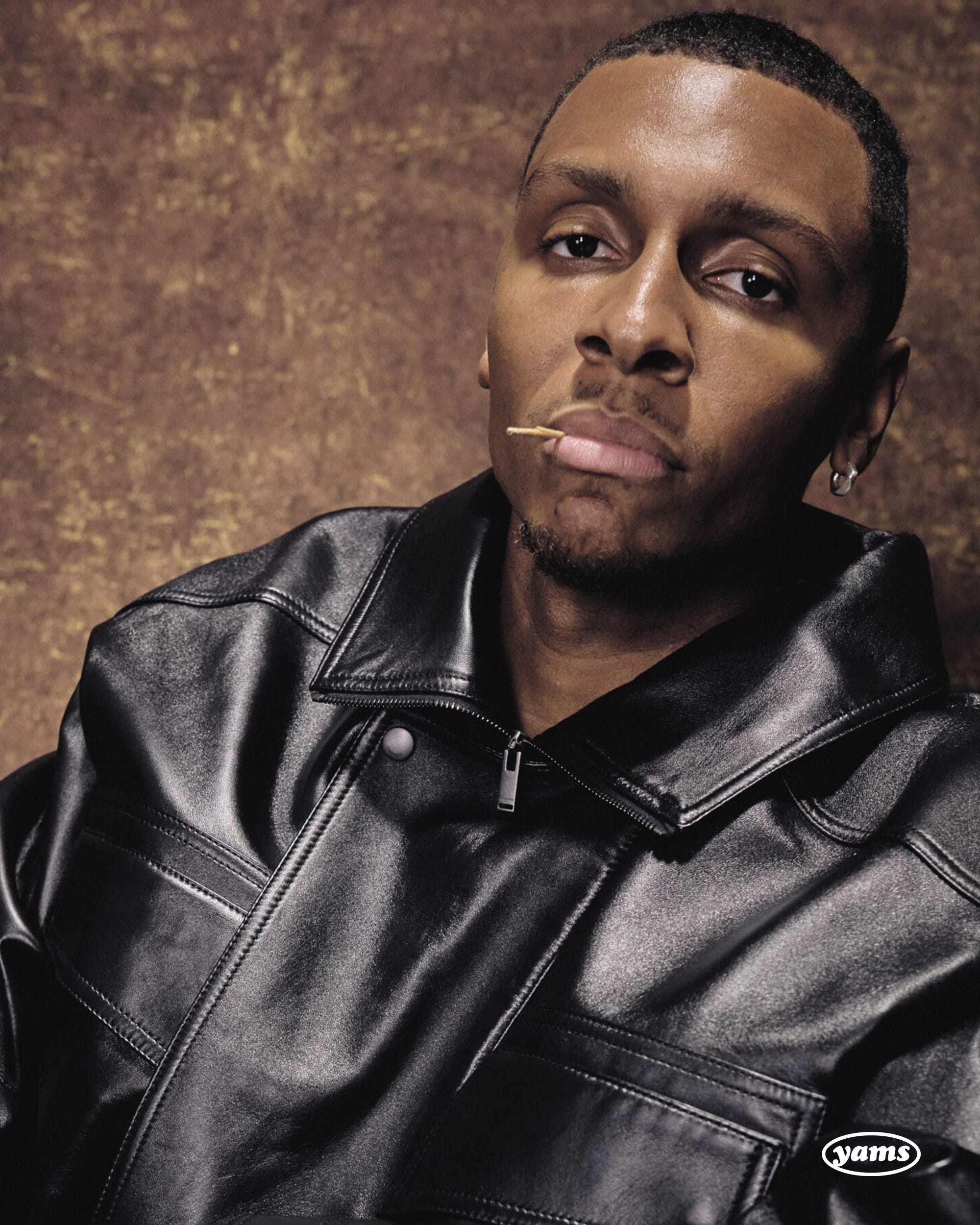
He often finds himself caught doing a balancing act. Whether it’s the common ground between being sanctified and secular, stepping out as Micah or Masego, or being transparent over being transactional, he still seeks human interaction even when that desire isn’t reciprocated. In true Gemini fashion, though, he’s accepted that there’s a thin line drawn in the proverbial sand.
Throughout his life, Masego has recalled having two identity crises. The first came in 2020 when his world tour was canceled due to the COVID-19 pandemic. “A lot of my identity was [in being] a performer,” he admitted. “When that was stripped away, I had to figure out who I [was] if I’m not performing.” The second came last year when his Los Angeles home was destroyed during the wildfires. “I was really trying to build a life. I was buying custom furniture, doing yard work, and signing up for local whatever,” the 33-year-old reflected. “To see that not be God’s plan for me, I had to spend a lot of time like, ‘Okay, what is my relationship with things?’ I [needed] to get closer to my faith to make sure I’m not moving in a way [where it’s not] my desires and my plan for myself versus God’s plan.”
Masego ended up moving to Brazil, which felt like a “second Jamaica” to him— comparing both countries’ cultures, music, and internal comfort. His current residence, New York City, brings comparable joy. “It’s all familiarity,” he shared. “The first place my father went after Kingston was New York. So, I have family all over New York. I’m looking for comfort to balance out the stress of the industry.”
Coincidentally, he did his best to ensure the final stages of piecing together Fix Your Face weren’t that stressful. With over 150 tracks to choose from, Masego fully credited his team, a.k.a. “a room full of smart people,” who helped make sense of his creative, albeit chaotic, process. “The beauty and the balance of it is they just let me be an artist. I’m just gonna make music and do what I wanna do, and then we can sit and piece together something that is cohesive,” he praised. “We will never run out of music, I can tell you that part, but they knew which songs would convey what I was trying to say.” The album’s cover art channeled the energy of his late grandmother, which was intentional. “For whatever reason, you can show your emotions to your grandmother,” he quipped. “This was the closest to emotion I was expressing back then, so I wanted to kind of explore and honor that a little bit.”
If the version of Masego who made Lady, Lady could speak to the one who made Fix Your Face, the musician joked that they’d probably fight first and reflect later. “Back then, all I cared about were women,” he teased. “I feel like I would admire me, but I wouldn’t change my journey. I would probably try to avoid at least two heartbreaks, though. Just two.”
With this new era, Masego hopes his fans will meet him on this deeper level. His former cool demeanor can remain a thing of the past. Prioritizing tangible connection is why Adele’s Las Vegas residencies consistently sold out, Amy Winehouse’s legacy is rightfully immortalized, and Usher’s Confessions is certified diamond. Fix Your Face is placing Masego in that lexicon of openness, with fans now singing along to the vulnerable soundtrack of his own making.
So, picture yourself at a Masego show in the fall of 2026. The world itself may not feel like the way it has previously. We’re routinely living through unprecedented times, but you’ve pressed play on Fix Your Face— an album that feels like a hug you’re craving, the “come back to yourself” moment you’ve been avoiding, or something else you haven’t quite found the words for yet.
“I wanna just kinda be placed in that lineage by the end of the tour where it’s like, ‘Oh yeah, these records from Sego are very vulnerable, but we can still have a good time. It’s also kind of a metaphor to knowing you don’t have to just sulk. You can speak out how you’re feeling and then, you know, it’s like, let’s get outta here. You can’t let a down day become a down month, okay? You got to fix your face, remember who you are…”
I am an avid Masego fan, who has seen him perform in multiple cities, and I couldn’t agree more that this album ranks completely different in his discography. There is a tone of honesty all throughout the tracks and the sequence is quite exquisite. His intention is always felt and I hope anyone listening to this walks away with a new favorite track.
Really enjoyed reading this!