



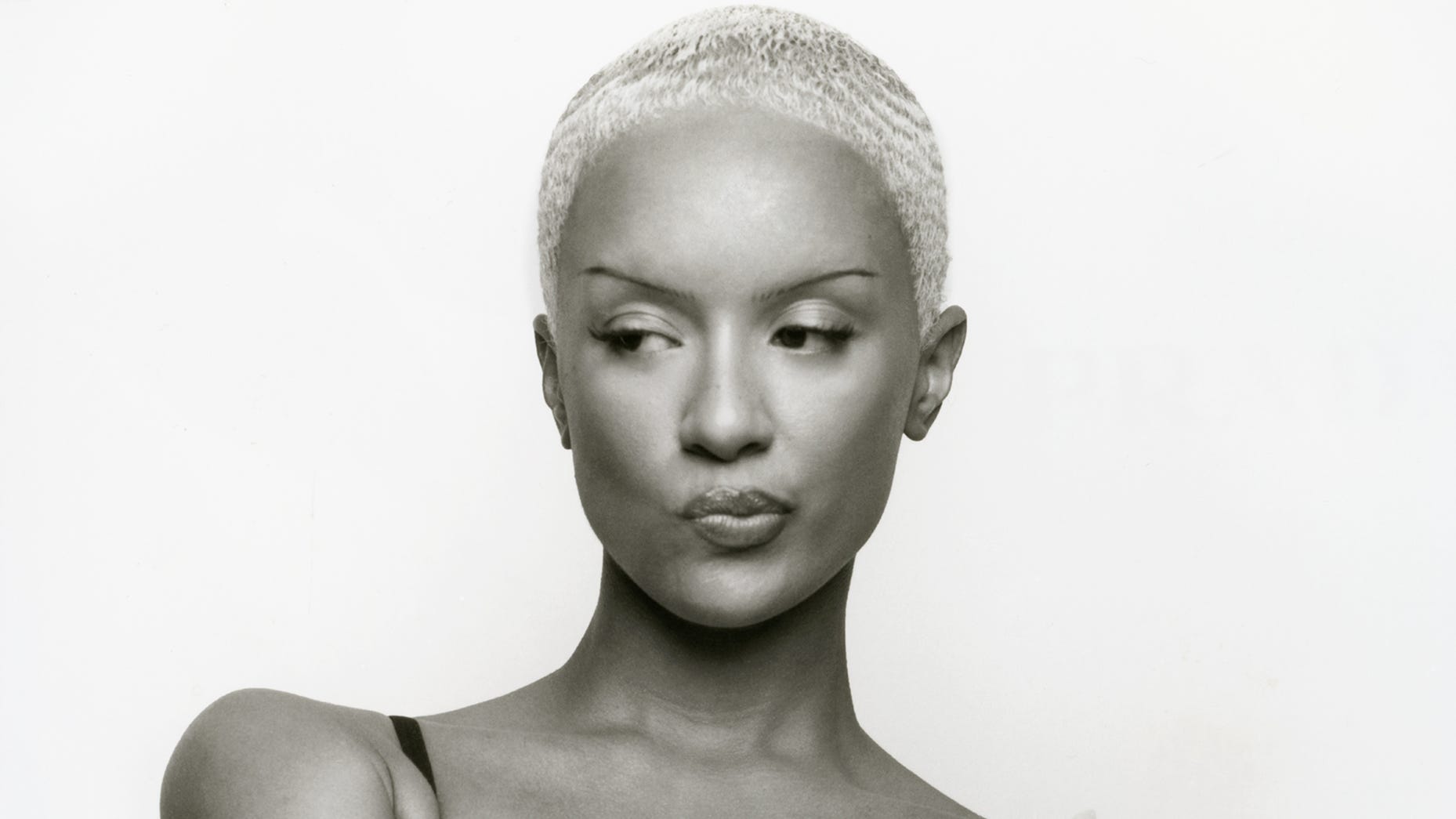
For the past five months, the internet has been trying to figure out who exactly Imani Imani is. Meanwhile, she’s been in Germany, minding her business and making music.
When we connect over Zoom, she’s sitting in a studio in Berlin, the city she now calls home. Her producer works in the next room, and she’s stepped away from making music to find a spot with good lighting for our conversation. It’s a pretty ordinary afternoon, which feels almost funny considering the circumstances surrounding her recent introduction to the world.
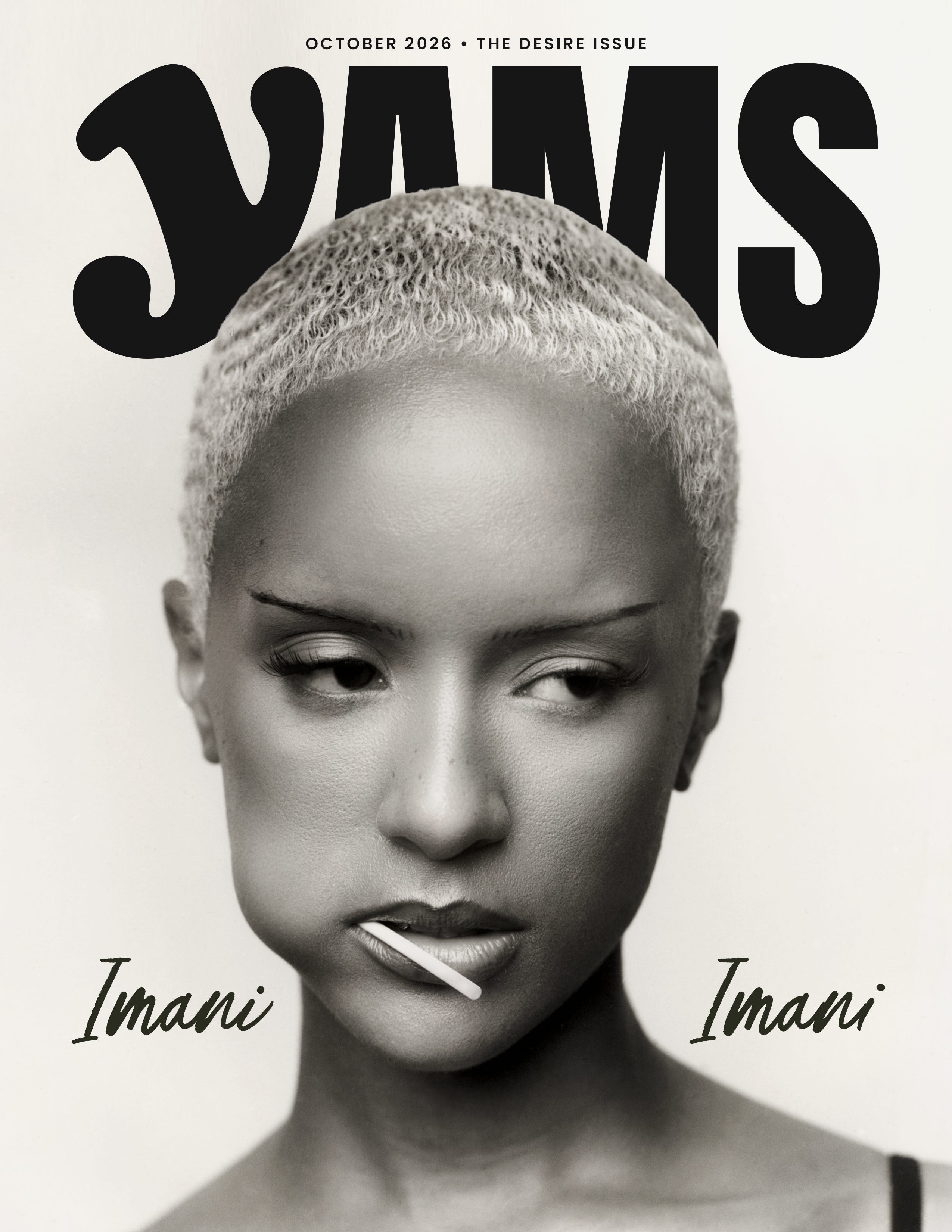
Just a few months ago, Imani was something of a mystery. Her debut album, Papercut, arrived in June with the kind of intrigue usually reserved for artists who have spent years building an audience. Except Imani hadn’t. There was no extensive catalog to revisit, no SoundCloud account to investigate, and hardly any interviews to piece together. There was simply the music: a collection of alternative R&B, soul, and experimental pop that felt both familiar and difficult to place. And then there was the connection to pgLang, the creative company founded by Kendrick Lamar and Dave Free, which only made the questions louder.
Naturally, the internet got to work. Who was this woman? Where did she come from? And how had someone with so little public history ended up signed to one of music’s most influential figures?
But while listeners played detective, Imani did what she’d always done: make music.
“It’s been crazy in a very subtle way,” she tells me about life following the album’s release. “If I go online, it’s very much there. If I put my phone away, it’s not really there at all.”
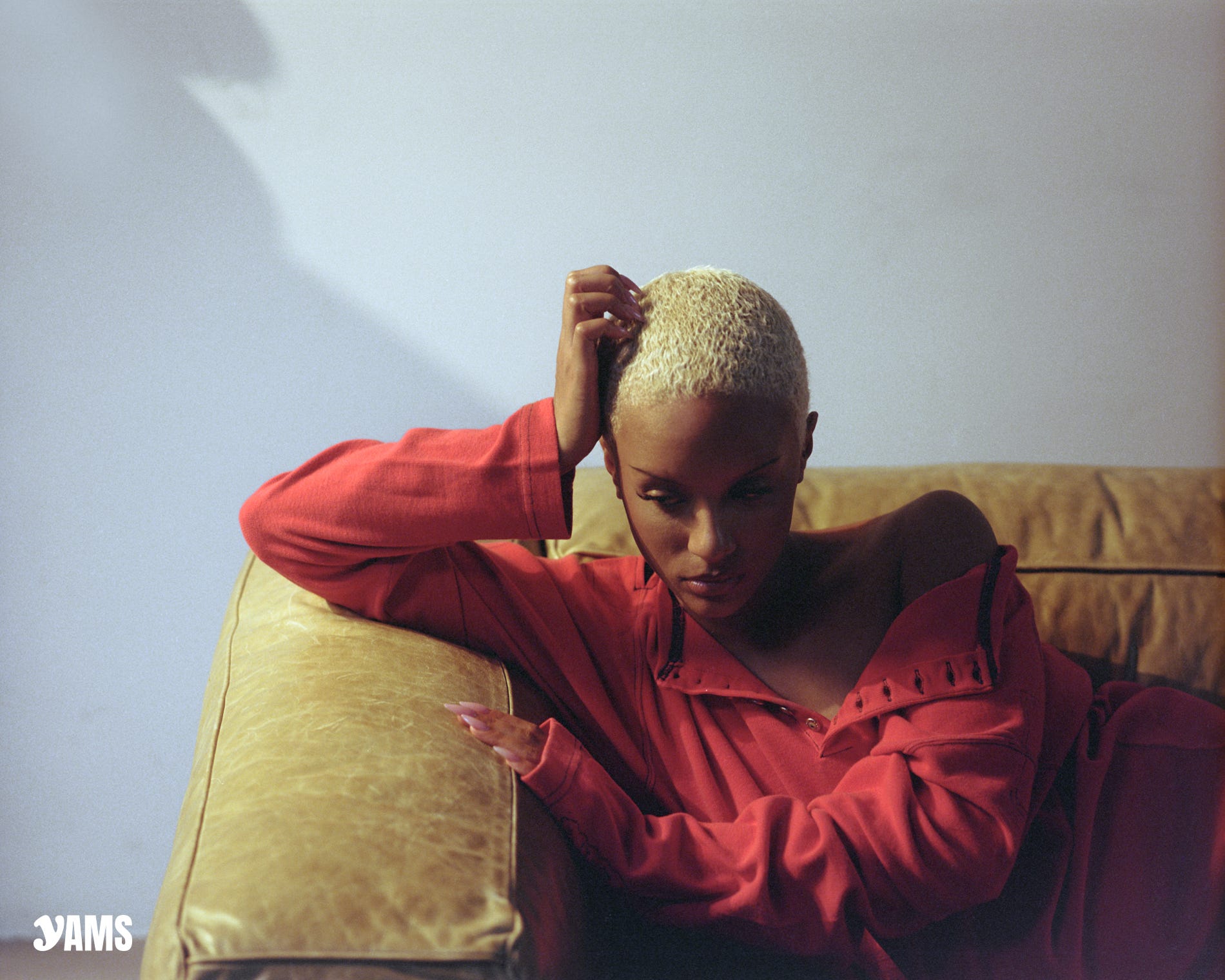
Online, people are discovering her music and developing their own relationships with songs that, until recently, existed almost exclusively between her and a small circle of collaborators. Offline, she’s still going to the same studios and working with the same producers. The response has been surreal, but she doesn’t seem particularly interested in allowing it to disrupt the life she’s built.
It’s refreshing in an industry where artists are often encouraged to turn every moment into content. Imani is at the start of a career many musicians spend years chasing, and she’s content to let the excitement happen outside the studio walls. For her, the real work is still happening inside.
Perhaps that’s because, long before the world knew her name, she had already spent years learning to exist in the space between who she was and who she wanted to become.
A Beautiful Kind of Sensitivity
Imani Imani (born Imani Ram) grew up in Utrecht, a Dutch city outside Amsterdam that she describes as a quieter counterpart to the Netherlands’ capital. Her parents were separated, but despite living in different households, they shared an appreciation for the same music. D’Angelo, Jill Scott, Al Green, Luther Vandross, and Erykah Badu provided a common soundtrack, one of the few connections she remembers finding between them.
At her mother’s house, however, music wasn’t always playing. Her mother and her mother’s new partner had different tastes, so silence often filled the space instead. “There were also a lot of moments where I was creating my own music in my mind just to play some music,” she remembers. “And I think that’s still where I try to create from, like the silent moments where I wanna fill it up.”
Even now, her music seems fascinated by the spaces between things: the tension before someone confesses their feelings, the uncomfortable silence in a relationship, the emotions we don’t always have the language to explain. There’s a softness to her delivery, but the feelings underneath rarely sit still.
For much of her childhood, she didn’t know how to appreciate that sensitivity.
“I do believe I was kind of born an artist,” she says. “The downside of the artist life or being an artist is that you’re always a little bit too aware of certain things, or you feel too much sometimes, and I’ve had that my whole life.”
Music became a way to process those feelings. Finding her voice, however, required experimentation. Beyoncé was an early favorite, but Imani quickly realized the powerhouse approach of singers like Beyoncé and Whitney Houston wasn’t her style. Instead, artists like Maria Mena and India.Arie helped her understand that vocals didn’t always need to be enormous to be effective.
Her influences weren’t limited to traditional singers either. Young Thug fascinated her because of the unusual ways he manipulates his voice, while the Black Eyed Peas inspired her with their fearlessness and willingness to transform familiar sounds into something unique.
At 17, Imani found herself contemplating a more traditional educational path, but the thought of continuing school instead of pursuing music began to haunt her. Literally.
“I had nightmares about not doing music. I was like, ‘No, there’s something else out there for me that I should go and follow.’”
So she left school, took a gap year to create, and eventually enrolled in music school. Around that time, she met Daan Zinkhaan, the producer who would become her closest musical collaborator and help shape the sound of her debut. She recognized something in him almost immediately: a willingness to take risks.
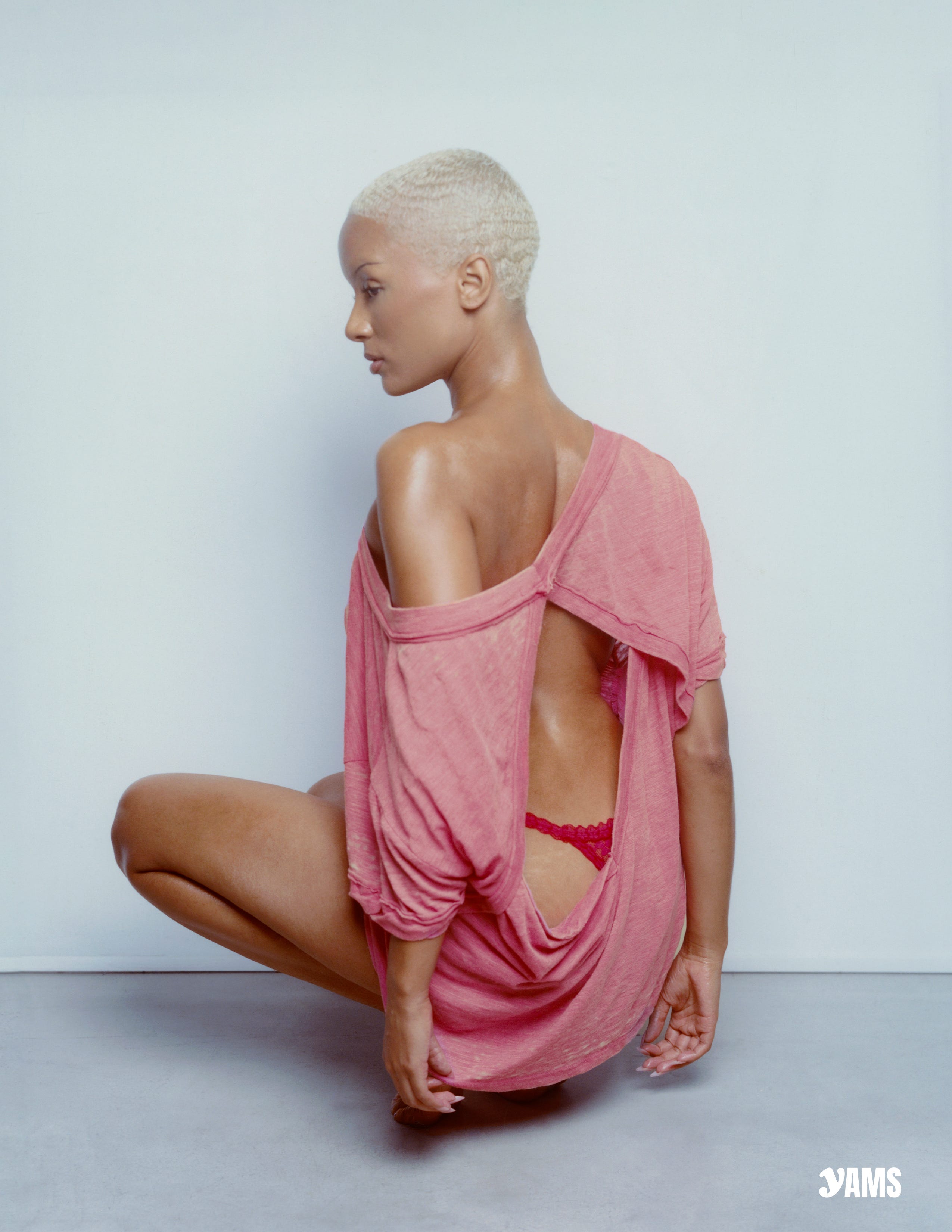
“I wanted a crazy producer,” she tells me. Other musicians she’d encountered were talented, but seemed hesitant to venture outside familiar territory. Daan was different. He shared her curiosity and wasn’t concerned with whether two seemingly unrelated sounds belonged together.
Years later, that creative chemistry remains central to her music. While her career has expanded considerably since those early sessions, Daan is still the person making music in the next room.
Becoming Imani Imani
Imani’s relationship with pgLang began long before the public knew there was one.
Around 2021, she and her small creative team were sharing experimental music and visual work on Instagram. They didn’t necessarily intend to attract industry attention. They were simply creating things they believed in and putting them into the world. Somewhere along the way, those posts caught the attention of Dave Free, Kendrick Lamar’s longtime business partner and co-owner of pgLang.
He reached out through a private burner account, saying he recognized purpose and patience in her work. Imani, understandably, wasn’t convinced the message was real or from the actual label executive, Dave Free.
At the time, pgLang was still relatively new, and Dave Free was hardly a public-facing personality. Before their first phone call, Imani searched online for footage of him talking and eventually found a brief radio appearance that let her recognize his voice.
When the phone rang a few days later, she got her confirmation. “Oh my God, it’s actually him,” she remembers thinking.
What followed wasn’t an immediate record deal or sudden relocation to Los Angeles. Instead, they began working from their shared appreciation for art. They talked about creativity, philosophy, and the reasons people feel compelled to make things. Free introduced her to his team, and Imani continued sending music whenever she felt she had something worth sharing.
“He was like, ‘Whenever you feel ready to send something, just do it. I’ll be here,’” she recalls.
That patience became central to how they work together. Rather than pushing Imani toward a specific sound or release schedule, Free gave her room to figure things out. Eventually, she met Kendrick Lamar backstage at a Mr. Morale & The Big Steppers tour stop in Amsterdam, another moment that helped turn an unlikely Instagram message into something tangible.
Today, Imani holds a notable position as pgLang’s first woman artist, joining a musical roster that includes Lamar and Baby Keem. She takes pride in that distinction.
“I really liked it ‘cause it was my personal goal to be their first girl on there,” she says. But beyond that milestone, she’s most excited by what their differences make possible. As a Dutch artist with Surinamese heritage, her cultural background differs considerably from her labelmates'. She laughs about having to introduce some team members to Suriname, a country they hadn’t known much about before.
“I mostly like that we come from such different worlds, and that there’s so much that we can learn from each other,” she explains.
It’s an approach to collaboration that feels consistent with everything else she values. Imani isn’t particularly concerned with fitting neatly into an existing identity. She’s more interested in what happens when different perspectives, cultures, and ideas share the same space.
The Desire for More
If there’s one word that seems to define Papercut, it’s yearning.
Not necessarily the dramatic, all-consuming longing we typically associate with love songs, although there’s certainly plenty of that here. Imani’s debut album explores a more complicated kind of wanting: the desire to be understood, to experience something deeper, to become someone different, or simply to feel more than you do right now.
The project grew out of years of private experimentation. While many artists spend their early careers releasing mixtapes and demos in hopes of finding an audience, Imani made hundreds of songs without sharing them publicly, exploring genres without the pressure of knowing how listeners might respond.
That freedom was valuable, but it came with its own frustrations.
“You can’t even, like, go out there and be like, ‘I’m an artist.’ It’s like, um, are you? Like, where’s the art?”
It’s a revealing admission from someone whose introduction has been defined by mystery. Behind all that intrigue was a young woman who simply wanted to share what she’d spent years creating.
The songs on Papercut explore romantic relationships, attraction, vulnerability, and the contradictions that emerge when desire collides with reality. But Imani sees the project as something more expansive than a collection of love songs. It’s also a reflection of her own hunger for creative fulfillment, documenting a period when she could feel herself approaching the life she wanted without quite being able to reach it.
“I think that feeling of, like, always kind of in the back of your mind having something else to think of or to do or wanting in your life, that’s what Papercut is about to me,” she explains. “It’s like, I want, I need more.”
That sentiment becomes even more interesting when you consider that she’s finally reached the other side of it. The music is out. People are listening. And the longing that once fueled so much of her work has begun to change shape.
“Now that I’ve released, I don’t feel that way anymore,” she says.
There’s something beautiful about an album serving as a record of emotions you’ve somewhat outgrown. For Imani, Papercut captures a version of herself from before she fully stepped into her identity as an artist.
Take “Mind Games,” one of her two favorite songs on the project. She describes it as the album’s emotional center, reflecting the friction of wanting someone while resisting that desire. Her other favorite, “On Demand,” represents a different kind of satisfaction. It was simply fun to make, a song that came together naturally and still carries that effortless energy whenever she hears it.
Then there’s “You’re Mine,” a personal favorite of mine and a song that she considers one of the project’s strongest accomplishments. “Chasing,” on the other hand, taught her a different lesson. She found herself second-guessing the song’s original concept, repeatedly trying to make the writing deeper or more poetic than it needed to be. Eventually, she returned to her first instinct.
“Sometimes the simplicity of it is what makes it so good,” she says.
When I ask her to describe Papercut in just three words, she doesn’t hesitate. “Vulnerable, sexy, and bold.”
Three words that, in many ways, could describe desire itself.
A Little More Fearless
Now that the world has finally met Imani Imani, the obvious question is: what happens next?

She’s already back in the studio, working with the same collaborators and approaching the creative process with the same curiosity that defined her earliest recordings. The response to Papercut hasn’t fundamentally changed her perspective. She’s grateful for the love, but isn’t interested in chasing approval.
What she does want, however, is to push herself further.
“I would like to take more risks moving forward in my music, because I know I can and I’ve already done that.”
She’s interested in collaborators who approach sound with a similar sense of adventure. PinkPantheress is high on her list, an artist she admires for creating music that feels youthful and playful without sacrificing emotional depth. She’s also intrigued by the raw, unpredictable production associated with artists like fakemink, particularly what happens when unconventional beats find the right voice.
Soon, she’ll face an entirely different creative challenge: performing. At the time of our conversation, she was preparing for her first live shows, an experience she approaches with equal parts excitement and uncertainty. Having spent so much of her career creating privately, stepping onto a stage means introducing another version of herself to the world, one she hasn’t fully met yet.
“I think a big part of this is really just doing it and meeting that version of myself on stage while people are watching,” she says.
At first, she wants intimate environments where she can connect directly with listeners, something she hasn’t had many opportunities to experience since releasing her music. But don’t mistake that desire for intimacy as a lack of ambition.
“I love stadiums,” she admits.
Another contradiction feels perfectly at home in Imani’s world. An artist who values privacy, but wants to be seen. A singer with a soft voice and an appetite for wild production. Someone who dreams of creating intimate moments with a hundred people and eventually commanding a stadium full of thousands.
But the more we talk, the less these things feel like contradictions. They’re simply different sides of the same person.
When I ask what she hopes listeners take away from her music, she seems more interested in allowing people to decide for themselves. Since releasing Papercut, she’s been surprised by how differently listeners interpret the songs. Music she sometimes finds emotionally overwhelming has become a source of comfort for others.
More than anything, she wants her music to give people permission to recognize themselves in all their emotional complexity.
“I can be sexy and sad at the same time,” she says, describing the openness she hopes her work encourages. “I can be whatever. It doesn’t really matter. Like you can just do the whole spectrum of it.”
That thought gets to the heart of what makes her music compelling. We spend so much of our lives organizing our feelings into categories that are easier to understand. Happy or sad. Confident or insecure. In love or heartbroken. But desire rarely works that way. We can want something and fear it. We can feel fulfilled and still hunger for more.
For years, Imani lived somewhere between those feelings, creating music in quiet rooms and imagining a life that hadn’t quite arrived. Now that it has, she’s discovering that reaching one destination doesn’t mean the wanting disappears. It simply makes room for something new.
Back in Berlin, her producer is still in the next room. More songs to make, more risks to take, and an entirely new version of herself waiting somewhere on a stage. For someone who once had nightmares about a life without music, that’s a pretty beautiful place to be.
She’s one of my favorite artists right now‼️